when evaluating taiwanese cloud server vendors, regional coverage and number of nodes are the two key factors that affect user experience and service stability. these two indicators are directly related to latency, disaster recovery, and scalability, and are especially important for companies that want to optimize localized services.
regional coverage determines the access points and accessibility of cloud services in different cities or regions. wide coverage means users can access services from geographically closer nodes, thereby reducing network hops and latency, and improving page loading and application response speeds.
the number of nodes reflects the overall distribution density and load dispersion capabilities. more nodes can help balance traffic, shorten paths, and reduce the risk of single points of failure, but you also need to pay attention to the quality of network interconnection and the efficiency of synchronization between nodes.
in the taiwan market, data sovereignty and compliance requirements may require on-site storage or backup. regional coverage and the number of nodes not only affect latency, but also affect the location of data, backup strategies, and the feasibility of complying with regulations.
in addition to the number of nodes and geographic distribution, node connectivity, bandwidth capacity, availability zone design, and sla commitments should also be evaluated. the rankings should combine these quantitative and qualitative indicators to give a more informative ranking.
methods such as delay testing, route analysis, trial bandwidth and fault drills can be used during evaluation. combined with business traffic distribution and peak demand, determine whether the node distribution can meet the actual load and disaster recovery requirements.
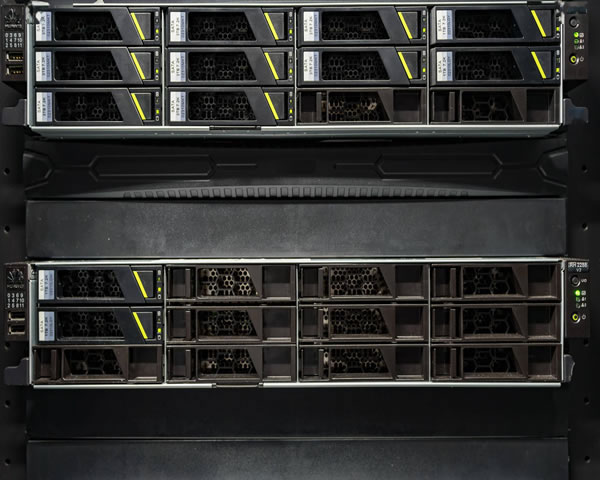
low-latency applications (such as real-time communications or financial transactions) should give priority to vendors with dense nodes and local coverage; for static content or distributed services, the number of nodes and cdn integration capabilities should be weighed to reduce costs.
taken together, regional coverage and number of nodes occupy a core position in taiwan's cloud server vendor rankings. it is recommended that enterprises conduct multi-dimensional comparisons based on actual business scenarios, combining latency testing, compliance requirements and sla terms, and give priority to manufacturers with good local coverage and high-quality network interconnection.
- Latest articles
- The Leasing Terms And Exemptions Of The Hong Kong Station Cluster Must Be Verified Before Signing The Contract
- Affordable U.S. High-defense Server Operation And Maintenance Strategy Includes Automation And Cost Optimization Methods For Monitoring
- How SMEs Can Choose Vietnam Site Cluster Servers: Cost-performance And Technical Support Evaluation
- When Choosing A Xingtai VPS Hong Kong Server, You Need To Evaluate The Quality Of Service And After-sales Standards
- How To Determine Which US Server Hosting Provider Is Best Suited Through Trials And Speed Tests
- FAQ Collection: Infinite Rule + Thailand Server Disconnection And Lag Solutions
- Guide: How Chinese Users Can Handle Cross-border Latency And Login Issues On Korean Servers
- Recommended Operations And Monitoring Tools For Purchasing Cloud Servers In Thailand
- What To Do If A Hong Kong Data Center Goes Down, Quickly Pinpoint The Cause And Activate Backup Measures
- Comparing The Advantages And Disadvantages Of Singapore Cloud Server VPS Versus Dedicated Servers Helps You Make A Choice
- Popular tags
-

How To Choose A Suitable Taiwan Server Cloud Space To Improve Website Speed
This article discusses in-depth how to choose a suitable Taiwan server cloud space to improve website speed, provide professional advice, and assist SEO optimization. -

Can Cloud Servers Be Registered In Taiwan? Sharing Of Cross-border Access Optimization Strategies In The Context Of
in the context of "can cloud servers be registered in taiwan?", this paper analyzes the differences between registration and compliance, and proposes cross-border access optimization strategies for taiwan computer rooms, including cdn, smart dns, network strategies and compliance suggestions, which are suitable for seo and geo optimization. -

Common Misconceptions In Installing Taiwan VPS And Cloud Servers
This article explores common misconceptions in the installation of Taiwan VPS and cloud servers, provides professional advice to help users avoid errors and improve server performance.